
Fomba Gasy Trilogy Cultures from Madagascar
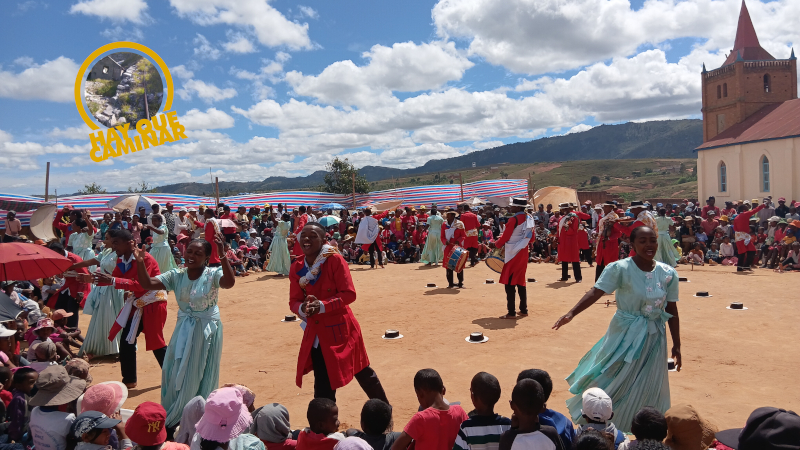
We spent five and a half months in Madagascar following the Ramilison Besigara Zanany company, descendant of one of the greatest Malagasy artists, founder of an ancient tradition of indigenous musical theater: hira gasy. Every year, on the central plateau of the African island, around Antananarivo, this very refined form of entertainment is supported by a significant number of local companies, made up of 30/40 artists (mphira gasy).
Each company (tarika) is organized according to a division of artistic roles and skills, necessary to cope with the arduous artistic season that begins in April, with the end of the rainy season and the start of the Easter holidays. Over the following months, activity intensified when ancestral rites linked to famadihana appeared, the great feast through which the Merina paid homage to their dead: exhuming them, mourning them and dancing with them.
We have been present from the first rehearsals of the tarika – which like every year learns a new “song” (hira vao) through patient work of collective memorization – to the great famadihana of Ramilison Besigara, Edwige Ramanambelo, Perline Razafiarisoa and all the ancestors of the company, which took place in the original village of the Besigara family: Mandrosoa Antongona, a few kilometers from the capital.
Each hira gasy is a large suite built around its core: the word and the art of its declamation (kabary). Around: the elegant choral songs, the identity dances of the ancestors, the well-attended acrobatic performances and the grand final dance (vakodrazana). An hira lasts on average an hour and each company performs the short story with that of the previous year, alternating with another group “rival” with which a sort of artistic certainty is created, which greatly entertains the public and captivates them for almost a whole day.
We attended dozens of shows by Tarika Ramilison Besigara Zanany and all the other companies the group has “confronted”: an unforgettable human and artistic experience for those like us who have dedicated their entire lives to listening to music from all genres and origins. We have also shot a considerable amount of video material which tells the absolute beauty of this ancestral art and which we are editing into a feature film which will tell the story of this musical journey.
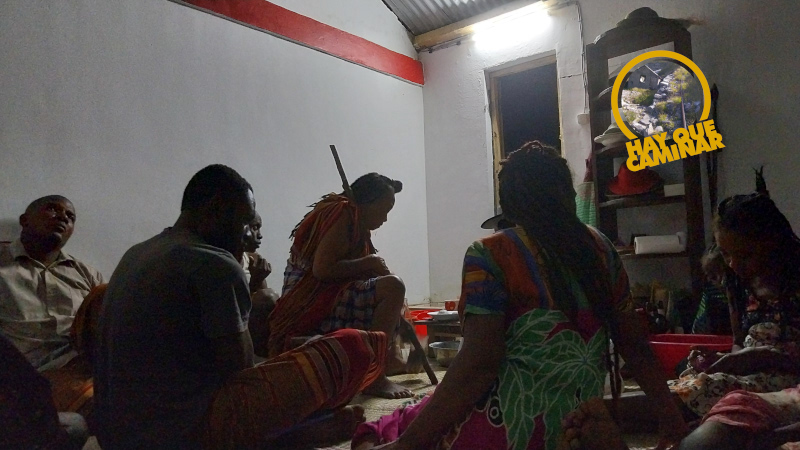
During our long stay in Madagascar, a country characterized by truly enviable cultural diversity, we set out in search of other specificities. We then traveled to Mahajanga in the North-West to try to enter the ritual of tromba [pronounced: “trumba”], a rite of possession through which ancient Sakalava kings manifest themselves to bring blessings, guidance and material guidance, useful to those who invoke them. These meetings, whether public or intimately family, are fortunately not yet easy to document, because several taboos (fady) still protect the ceremony from strangers and cameras.
However, we had the privilege of being invited to the rite by a medium directly descended from a line of Sakalava kings from Boeny. We participated in the rite for the scheduled two days, wearing a lambaoany (ritual sarong), participating in a joyful and discreet manner, receiving blessings under the sacred leaf, striving to capture every possible nuance of these extraordinarily intense moments and listening with unwavering pleasure the powerful voices of charismatic Sakalava women and the flowery virtuosity of the diatonic accordion, which constantly accompany the rite during its execution.
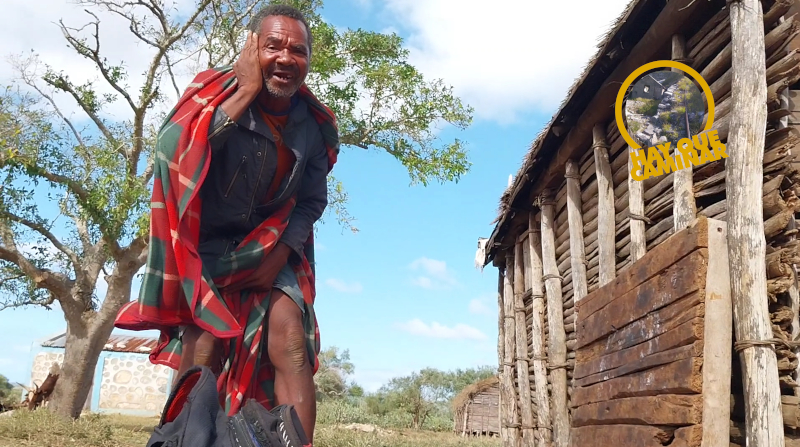
Final stop on our trip to Madagascar: the land to which we inexplicably feel most connected, probably for reasons of deep musical vibrations. It was indeed from Androy that the voices came which, from the beginning, aroused our interest in the Big Island. So we felt compelled to go there to finish our musical research. Our long journey to the far south took us to a small village, hidden by thorn forests and connected by narrow and dangerous sandy tracks.
Here we were able to get closer to three other fundamental endemic traditions: beko, a monodic and improvised lyrical song, lokanga, a raw three-string violin that accompanies the iconic tandroy dance. From the filming of the small performance of this family of farmers and shepherds was born the short film “Beko & Lokanga Tandroy”, a true manifestation of art and ancestral joy that we were lucky enough to find and the pleasure of living.
Fomba Gasy is the Malagasy expression of the ancestral traditions of Madagascar. Our trilogy, consisting of two short films and one feature film entirely self-funded, will be titled “Fomba Gasy Trilogy – Cultures from Madagascar” and all these documents will be presented throughout 2026-27 wherever requested.
Veloma!
Michele Coralli